









Roads connect cities and communities, but when they cut through forests, they can also divide ecosystems and threaten wildlife. Across many regions, expanding road networks are creating serious challenges for forest elephants and other species that depend on uninterrupted habitats.
How Roads Impact Forest Elephants
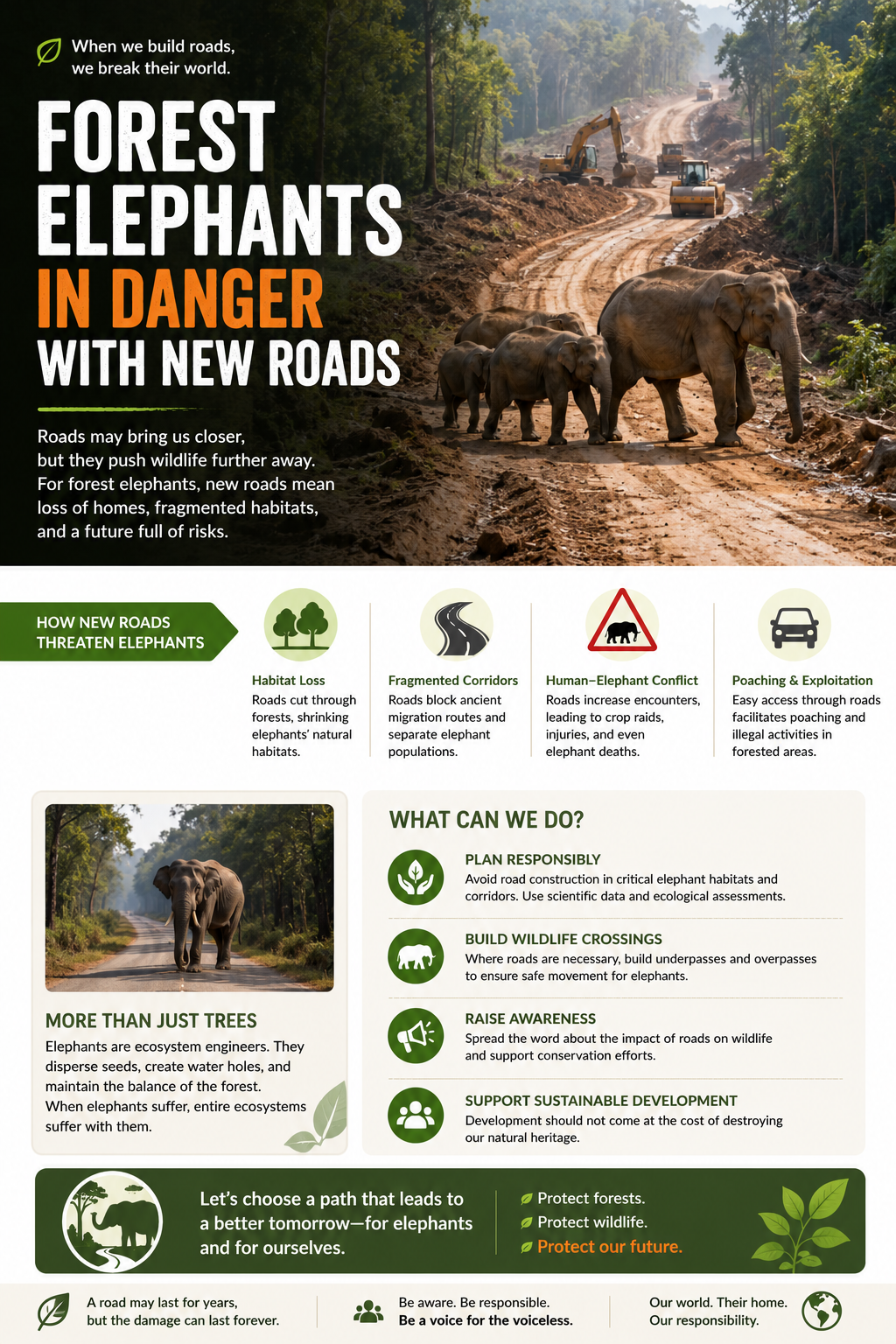
Forest elephants rely on large natural areas for food, migration, and social movement. New roads often fragment forests, making it harder for animals to travel safely and increasing encounters with human activity.
Habitat Fragmentation
When roads split forests into smaller sections, wildlife corridors disappear. Elephants may struggle to access water sources, feeding grounds, and breeding areas.
Increased Human-Wildlife Conflict
Road development can lead to increased settlements and vehicle traffic near wildlife zones. This raises the risk of collisions, stress on animal populations, and conflicts between humans and elephants.
Hidden Environmental Costs
Road construction can also contribute to deforestation, pollution, and ecosystem disruption. These impacts often affect not just elephants, but entire forest communities.
Protecting Wildlife Through Smarter Development
Sustainable infrastructure solutions such as wildlife crossings, protected corridors, and responsible planning can help reduce environmental damage while supporting development.
Final Thoughts
Progress and conservation do not have to compete. Protecting forests means protecting biodiversity, ecological balance, and the future of wildlife.
When we plan for nature today, we protect tomorrow.