





A reflection on human behaviour, plastic pollution, and our responsibility towards the planet.
Walk along a beach, and you will find evidence of life everywhere.
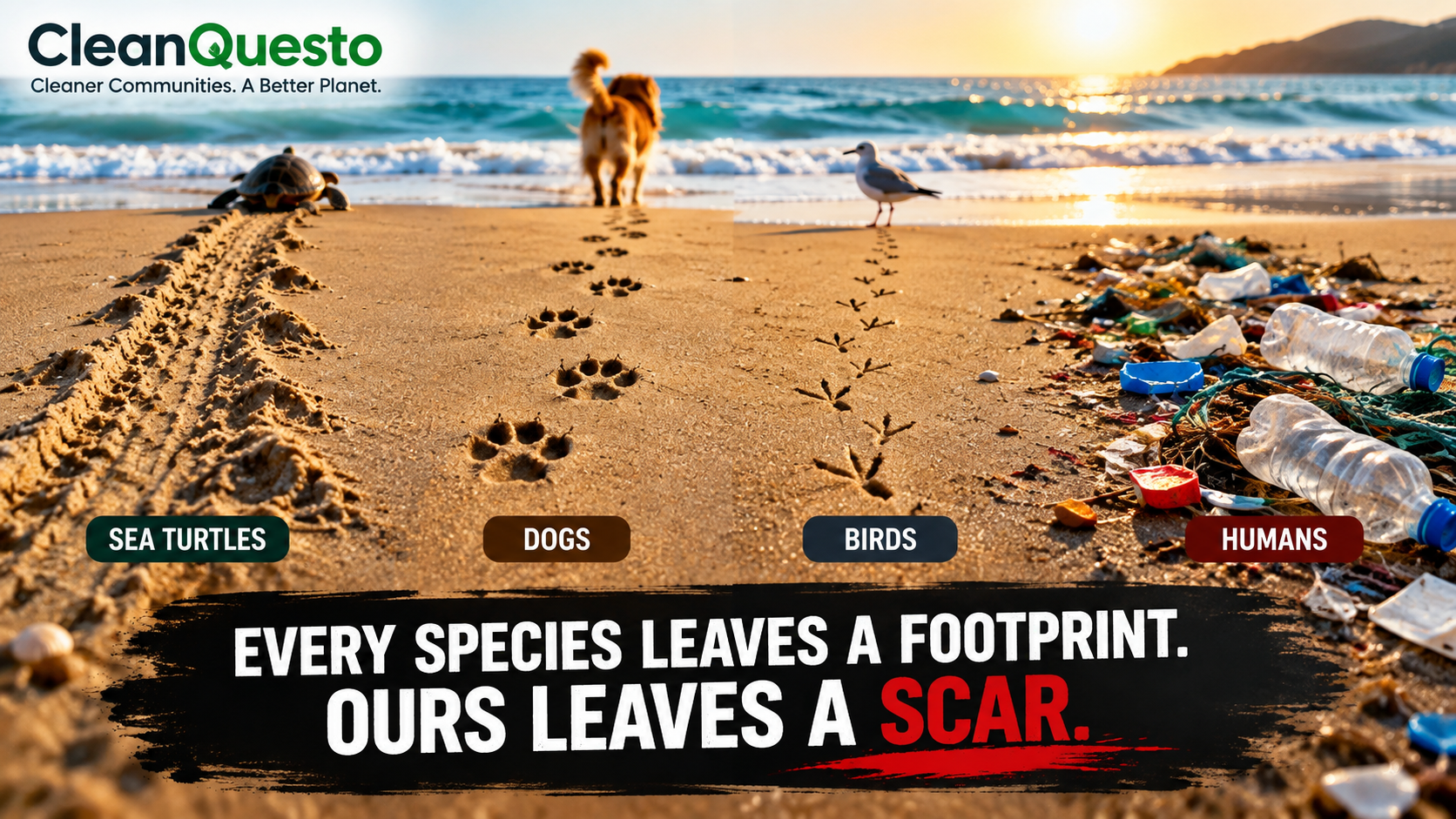
Sea turtles leave trails in the sand as they make their way towards the ocean. Dogs leave their paw prints. Birds leave delicate footprints as they search for food along the shoreline.
Every species interacts with nature in its own way. Their footprints become part of the natural landscape.
But what do humans leave behind?
Plastic bottles, food wrappers, discarded fishing nets, cans, packaging materials, and countless other forms of waste. What should have been a beautiful natural habitat often becomes a dumping ground for our convenience and careless consumption.
Every species leaves a footprint. Ours leaves a scar.
The Invisible Cost of Our Convenience
Plastic has made modern life convenient. From packaging and takeaway containers to disposable bottles and shopping bags, we use plastic in almost every aspect of our daily lives.
But convenience comes at a cost when we fail to manage what we discard.
A plastic bottle thrown carelessly on a beach does not simply disappear. It can remain in the environment for generations, gradually breaking down into smaller particles called microplastics.
Marine animals can become entangled in discarded fishing nets and plastic waste. Turtles and seabirds may mistake plastic fragments for food. Pollution can contaminate ecosystems, disrupt food chains, and threaten biodiversity.
The problem is not just the plastic itself. It is the mindset that treats nature as a place where we can consume, discard, and walk away without consequences.
Nature Doesn’t Have a Waste Problem. We Do.
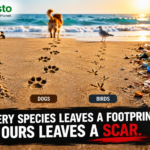
Look at the footprints in the image.
- Sea turtles: Their trails represent life, survival, and the natural cycle of marine ecosystems.
- Dogs: Their paw prints represent the everyday presence of animals sharing our surroundings.
- Birds: Their footprints remind us of the delicate balance of biodiversity.
- Humans: Our footprint is represented by the plastic waste and pollution we leave behind.
The contrast is powerful. Other species leave temporary marks on the sand, while our discarded waste can remain long after we have left.
The question we must ask ourselves is simple:
What kind of footprint do we want future generations to inherit?
Cleanliness Is More Than Keeping Our Surroundings Beautiful
Clean beaches, lakes, parks, roads, and neighbourhoods are not merely about aesthetics. They are essential for public health, biodiversity, and environmental sustainability.
Responsible waste management begins with individual choices:
- Refuse unnecessary plastic: Avoid disposable products whenever practical.
- Reduce consumption: Buy responsibly and avoid excessive packaging.
- Reuse whenever possible: Give usable products a second life instead of discarding them.
- Segregate waste: Separate wet waste, dry waste, and e-waste at the source.
- Recycle responsibly: Ensure recyclable materials reach appropriate waste collection and processing channels.
- Participate in clean-up drives: Take collective responsibility for maintaining public spaces.
- Respect natural habitats: Never leave litter behind when visiting beaches, forests, lakes, or parks.
Small actions, when practised consistently by millions of people, can create meaningful environmental change.
A Cleaner Planet Begins With Us
At CleanQuesto, we believe that building cleaner communities requires more than occasional clean-up activities. It requires a change in how we think about waste, consumption, and our responsibility towards shared spaces.
Through community participation, cleanliness initiatives, waste-hazard reporting, collection drives, and awareness activities, we aim to encourage citizens to become active participants in creating cleaner and more sustainable neighbourhoods.
Technology can help connect responsible citizens, communities, waste management organisations, and local initiatives to make environmental action more accessible and effective.
Because a cleaner environment cannot be created by governments or waste management organisations alone. It requires participation from every household, every institution, and every individual.
What Will Your Footprint Be?
The next time you visit a beach, park, lake, or public space, take a moment to observe what you leave behind.
Will it be a footprint that disappears with the next wave?
Or will it be a plastic bottle, a discarded wrapper, or waste that continues to harm the environment long after you are gone?
We have inherited a beautiful planet. We have a responsibility to leave it in a better condition than we found it.
Let’s leave footprints of kindness, not scars of pollution.
🌱 Join CleanQuesto. Be responsible. Take action. Keep our surroundings clean.
CleanQuesto – Small Actions. Cleaner Communities. A Better Planet.